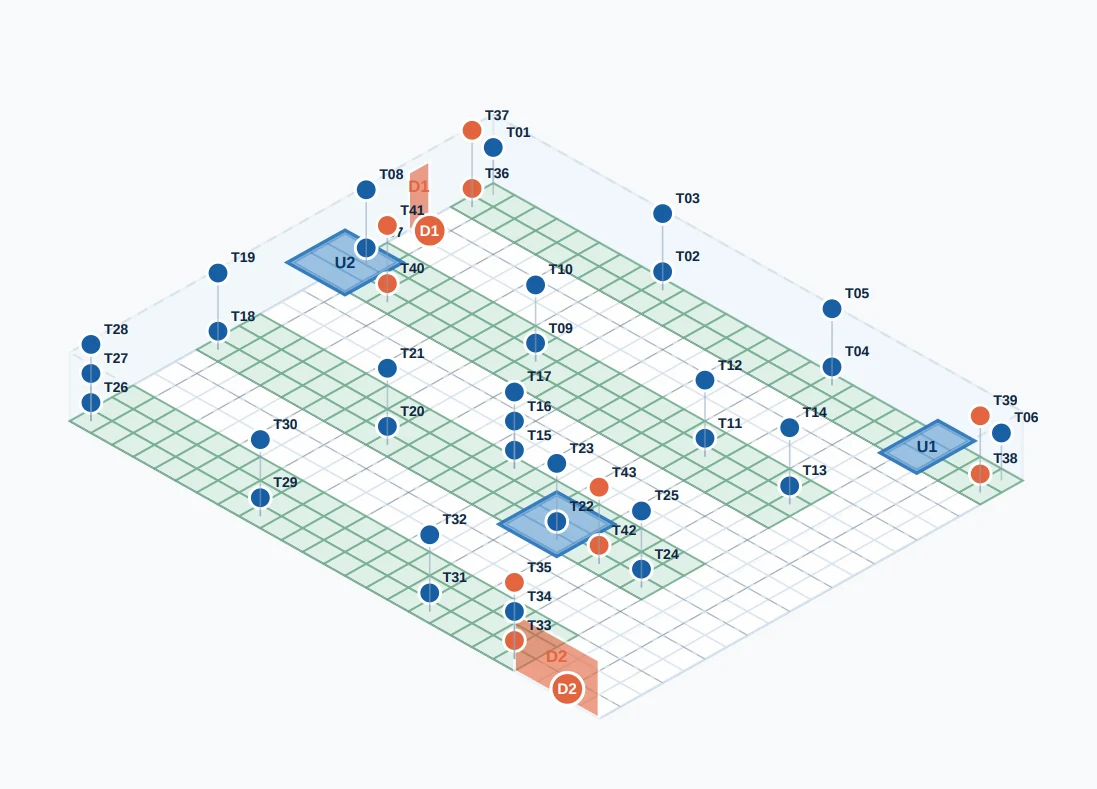
GDP distribution and wholesale

Temperature mapping of GDP warehouse 15-25 °C

For storage rooms, warehouses and distribution sites where products must remain within 15-25 °C or a comparable controlled room-temperature condition.

In brief

A GDP warehouse is not assessed by one average room temperature, but by product storage positions and relevant risk points. Mapping shows whether storage zones remain within the defined temperature limits and where routine monitoring is most defensible. Height differences, doors, external walls, HVAC, dispatch and loading are included based on risk.

Critical points

What makes a 15-25 °C GDP warehouse sensitive?

The measurement strategy should show that product locations remain within the agreed storage condition under normal and representative circumstances.

Height and rackingWarm or cold zones often arise from rack height, supply air, return air or limited circulation.
Doors and dispatchLoading moments, open doors and temporary storage can create local temperature effects.
Seasonal influenceSummer, winter, solar load and HVAC capacity determine whether one mapping is sufficient or remapping is needed.
Routine monitoringThe outcome should substantiate where fixed sensors make sense and which product zones are suitable.
Tools and 3D proposal

Start with a practical indication

Use the tool hub or create a 3D measurement-point proposal directly. It helps make room layout, product zones, doors and risks concrete before you choose a service level.

3D mapping tool for measurement points and logger placement
Approach

Four steps to a substantiated measurement report

The route stays the same, whether you measure yourself with rented loggers or outsource the full execution.

1

Situation mapped

We map your room, limits and risks, and select the appropriate service level.

2

Tailored measurement plan

Measurement points, risk zones, measurement duration and acceptance criteria are defined in advance.

3

Measurement of your choice

You measure yourself with rented loggers, or we come on site. The report is equivalent in both cases.

4

Report delivered

Data, analysis and conclusion in one report, ready for inspection or internal quality documentation.

View pricing and service levels

FAQ

Frequently asked questions

When is seasonal mapping needed?
Seasonal mapping is relevant when outside temperature, sun exposure, HVAC capacity or door use can affect the room. Sometimes one representative study is enough; sometimes summer and winter are more defensible.
Does every risk need its own logger?
No. The rationale matters more than a fixed rule. A risk point receives a logger when product is stored there, can be stored there or the point is needed to understand a relevant influence.
Is 15-25 °C the same as room temperature?
Not automatically. The storage condition must align with the product label, internal specification or QMS. The dossier makes the chosen limits explicit.
Can the dossier be used for GDP audits?
The dossier is intended as practical evidence for audits and internal review. Formal release and interpretation remain part of your own quality system.