Hospitals and healthcare institutions

Temperature mapping for hospitals and healthcare institutions

Map ward fridges, hospital pharmacy areas, medicine rooms, storage rooms and decentralised storage points using a practical risk-based approach.

Ward fridgeHospital pharmacyMedicine roomMultiple locationsZAS and GMP-Z context
In brief

Temperature mapping in a hospital or healthcare institution shows whether fridges, storage rooms and decentralised storage points are suitable for their intended storage conditions. It substantiates where products can be stored, where the fixed sensor should be placed and which locations need extra attention during audit, inspection or internal quality review.

Tools and 3D proposal

Start with a practical indication

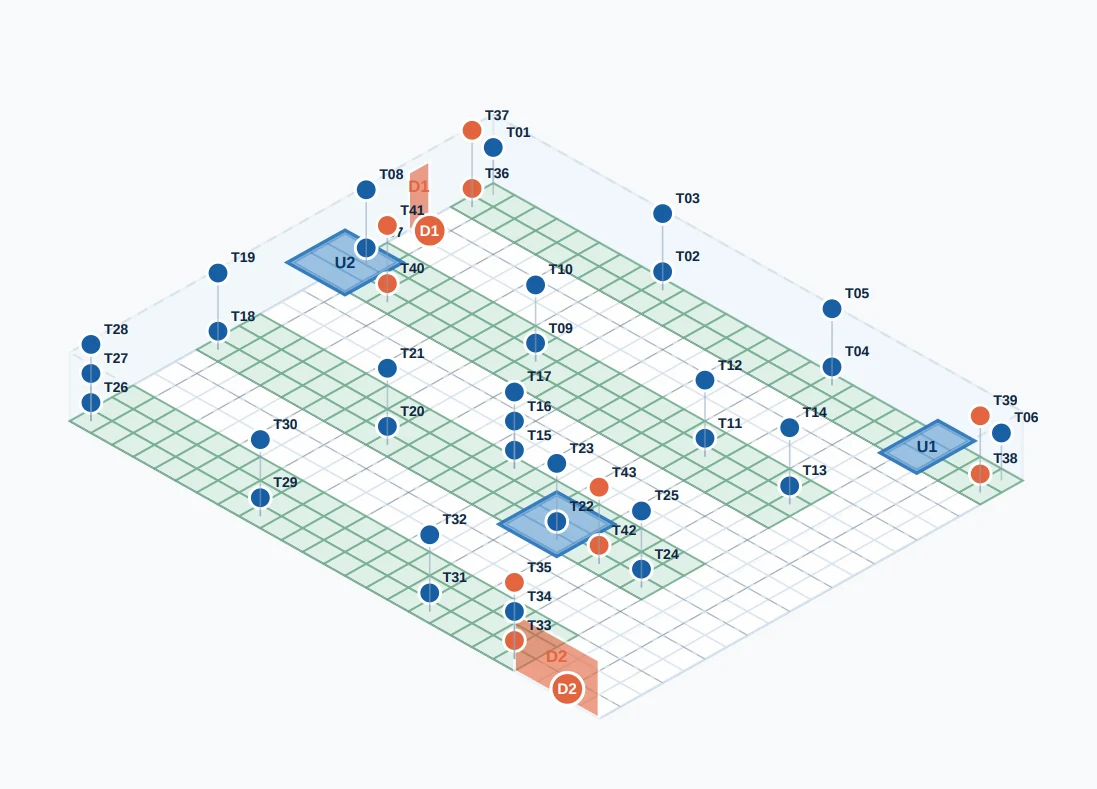
Use the tool hub or create a 3D measurement-point proposal directly. It helps make room layout, product zones, doors and risks concrete before you choose a service level.

3D mapping tool for measurement points and logger placement
Storage types

Central and decentralised storage require overview

Medicines and temperature-sensitive materials may be stored in the hospital pharmacy, wards, treatment rooms, laboratories or temporary storage points.

Refrigerated

Ward fridges and hospital pharmacy

For medicinal products, vaccines or materials stored at 2-8 °C. Mapping assesses door influence, loading, upper and lower zones and sensor position.

  • Ward and medication fridges
  • Product zones within 2-8 °C
  • Substantiated alarm and sensor position
Ambient

Medicine rooms, stores and temporary locations

For products stored below 25 °C, below 30 °C or product-specific limits. The focus is on heat load, sunlight, equipment, air conditioning and night/weekend conditions.

  • Medicine rooms and stock cabinets
  • Temporary or decentralised storage
  • Practical overview per department
Healthcare context

Applicable guidance depends on the application

For hospitals and healthcare institutions, the required substantiation depends on the product, location and local quality system.

ZAS

For hospital pharmacies, ZAS and internal procedures are important references for storage, management and quality assurance.

GMP-Z

For preparation in the hospital pharmacy, GMP-Z can be relevant as an interpretation or supplement to GMP.

Clinical trial medicines

Additional arrangements may apply for the storage, management and dispensing of investigational medicinal products.

Ward storage

For decentralised storage, it must be clear that products are stored and monitored according to their conditions.

Product information

The storage condition follows from product information, label or internal product specification.

Risk-based

Not every fridge needs the same approach. Critical locations receive more attention than standard locations.

What do we measure where?

From hospital pharmacy to ward fridge

The study design can include multiple locations while remaining risk-based per location.

LocationWhat does mapping assess?Typical output
Ward fridgeDoor influence, shelves, loading, sensor position and use by multiple staff members.Substantiated product zones and attention points per fridge.
Hospital pharmacyFridges, freezers, storage rooms and temporary storage locations.Dossier for central quality assurance and internal review.
Medicine roomHeat load, ventilation, equipment, shelf height and sunlight.Assessment of ambient-temperature storage and possible restrictions.
Treatment room or ORTemporary storage, workflow, exposure and procedural controls.Advice whether additional control measures are needed.
Laboratory or pathologyEquipment, samples, storage conditions and local quality arrangements.Substantiation aligned with material and application.
Approach

Three support levels

For multiple departments or fridges, practical clustering is often the most efficient route.

Level 1

Self-measurement with rented loggers

You rent calibrated data loggers and perform the measurement yourself. Suitable when you already have an internal approach and mainly need reliable instruments.

Level 3

Complete on-site execution

We perform the mapping on site, analyse the data and deliver the full dossier. Suitable for audit pressure, complexity or limited internal capacity.

View all pricing and service levels

What does the dossier contain?

What does the dossier contain?

The dossier helps record per location what was assessed, which locations are suitable and where monitoring or procedural control is needed.

See what a mapping dossier contains

ProtocolScope, duration, interval and acceptance criteria per storage type.
Risk assessmentClustering of fridges, rooms and critical storage locations.
Measurement planLogger positions per department, fridge or room.
Data and graphsMeasurement results and trends per location.
Location assessmentHot en cold spots, monitoring sensor advice and attention points per storage point.
ConclusionSuitability per location, including recommendations and certificates.
When to use mapping?

When to use mapping?

Mapping is especially useful when temperature control must be demonstrable or when the situation has changed.

New ward fridges in useCentral assessment of multiple locationsPreparation for inspection or auditDoubt about sensor positionTemperature deviations or alarmsNew medicine room or storage areaChange of department, equipment or layoutPeriodic risk-based requalification