Cold chain and refrigerated storage

Temperature mapping cold room 2-8 °C

Substantiate product locations, door influence, airflow and sensor positions in cold rooms where medicines, samples or temperature-sensitive products must remain within 2-8 °C.

2-8 °C cold roomDoor influenceEvaporator and airflowProduct locationsMonitoring position
In brief

Cold room mapping assesses whether relevant product storage positions remain within 2-8 °C during normal use. The study reviews door influence, evaporator or air outlet, airflow, height differences, loading, recovery after opening and the routine monitoring position. This clarifies suitable storage zones and any required restrictions.

Critical points

What makes cold room mapping different?

For 2-8 °C storage, the focus is on product locations, door behaviour and airflow, not only the average cold room temperature.

Door zoneThe effect of opening, loading and unloading often determines the warmest product locations.
Evaporator and airflowSupply air, return air and obstructions can create cold or warm spots.
Loading and product heightMeasurement points should match real storage positions, shelves and pallets.
Recovery behaviourAfter door movement or use, it should be clear how quickly product zones become stable again.
Tools and 3D proposal

Start with a practical indication

Use the tool hub or create a 3D measurement-point proposal directly. It helps make room layout, product zones, doors and risks concrete before you choose a service level.

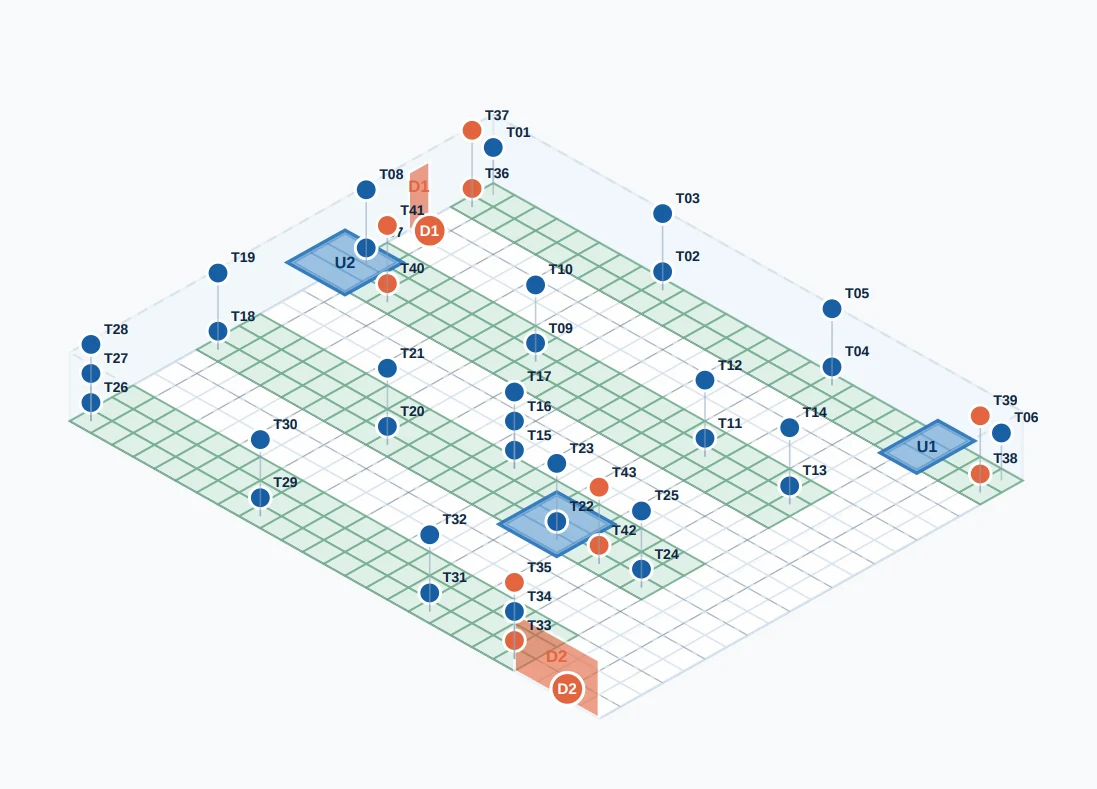
3D mapping tool for measurement points and logger placement
Qualification dossier

What do you receive?

The dossier records why the measurement setup fits your cold room, which product locations were assessed and what the temperature data mean for 2-8 °C storage. Acceptance criteria are aligned with the stored products, room use and the audit or QA question.

Cold room example

For a 2-8 °C cold room, we look at the door zone, evaporator, return air, pallet or shelf height and existing sensor position. The dossier shows which zones are suitable and where routine monitoring makes sense.

See what a mapping dossier contains

Protocol and risk assessmentPurpose, scope, measurement duration, interval, acceptance criteria and risk-based measurement setup.
Measurement point planLogger positions aligned with product zones, door, evaporator, return air, height and loading.
Raw data and trend graphsTemperature profile per measurement point, possible excursions and relevant use observations.
Hot- and cold-spot analysisSubstantiation of warmest and coldest product positions and the fixed monitoring location.
Conclusion and adviceAssessment of suitability per storage zone and advice on restrictions or monitoring.
Calibration certificatesTraceable calibration information for the data loggers used.
Approach

Four steps to a substantiated measurement report

The route stays the same, whether you measure yourself with rented loggers or outsource the full execution.

1

Situation mapped

We map your room, limits and risks, and select the appropriate service level.

2

Tailored measurement plan

Measurement points, risk zones, measurement duration and acceptance criteria are defined in advance.

3

Measurement of your choice

You measure yourself with rented loggers, or we come on site. The report is equivalent in both cases.

4

Report delivered

Data, analysis and conclusion in one report, ready for inspection or internal quality documentation.

View pricing and service levels

FAQ

Frequently asked questions

Is cold room mapping the same as fridge mapping?
No. The principles are similar, but a cold room often has stronger airflow, door influence, loading effects and height differences.
Does recovery after opening always need to be tested?
Not always. It is relevant when door use realistically affects product storage or when the QMS or audit question requires it.
Is relative humidity also measured?
Only when RH is critical for the product or room. RH measurement may require different loggers and additional cost.
Can I move my fixed sensor after mapping?
Mapping can support a better monitoring position. The change usually needs to be handled through your own change control or QMS.