What is included in a temperature mapping protocol?

A robust protocol is not just a formality. It is the approved document that records in advance what you intend to demonstrate, how the study will be performed and when the room or equipment will be judged acceptable. In audits, this is often where the real weaknesses show up: measurement points are not justified, acceptance criteria are missing or the study duration does not fit the storage area.

What reviewers look for

  • Is the scope of the room or equipment clearly defined?
  • Are measurement points and logger locations justified?
  • Are acceptance criteria established in advance?
  • Does the study duration fit the warehouse, cold room, fridge or freezer?
In short

A temperature mapping protocol defines the scope, objective, measurement strategy, logger placement, study duration, acceptance criteria and assessment method before the study begins. WHO explicitly describes protocol, execution, reporting and follow-up as four connected steps in a mapping study. GDP also requires mapping under representative conditions and routine monitoring positions based on the mapping outcome.

Choosing measurement points is only one part of the protocol

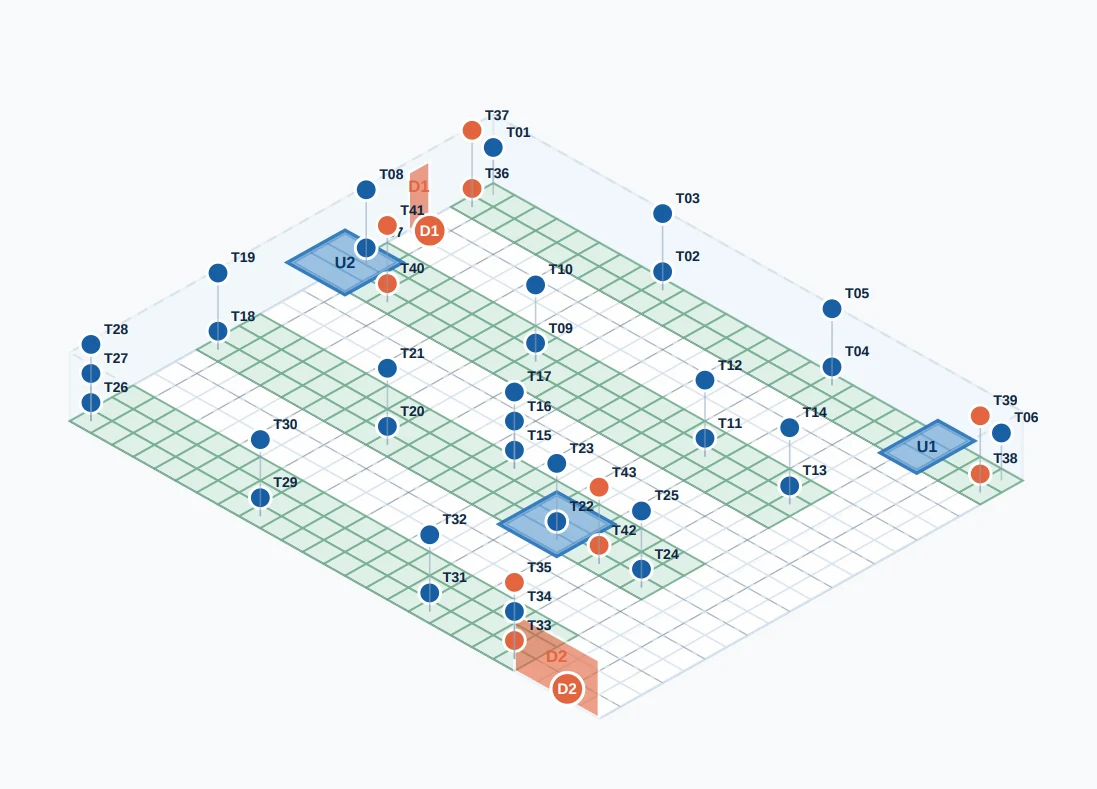
Our tool helps with logger placement and risk zones. The protocol also records scope, study duration, acceptance criteria, loading condition and the review route.

Open logger placement tool Have a protocol prepared 3D mapping tool for temperature mapping

What exactly is a temperature mapping protocol?

The protocol is the approved study plan prepared before measurement starts. It describes which room or piece of equipment is being assessed, under which conditions the study will run, which logger locations will be used and which criteria the results will later be assessed against.

For GDP-regulated storage, that is more than tidy paperwork. Chapter 3.2.1 of the EU GDP guideline states that an initial temperature mapping should be carried out before use under representative conditions. The same paragraph also makes clear that routine monitoring must be positioned according to the mapping outcome.

Why does this document matter so much in audits?

A report may look polished afterwards, but without a strong protocol the justification remains thin. If measurement points, duration or acceptance criteria are only filled in after the fact, it becomes much harder to demonstrate that the study design was sound from the start. That is why auditors often ask for the protocol before they ask for graphs and conclusions.

WHO takes a practical view: protocol, execution, reporting and follow-up form one study. ISPE places additional emphasis on predefined temperature limits, allowable excursions and a risk-based test strategy.

Protocol and report are not the same document

This page focuses on the protocol itself. The report follows only after the measurement and shows what the data mean. If you want to sharpen that distinction first, also read protocol versus report. If you want to see how the full dossier fits together, view the sample temperature mapping dossier.

ProtocolReport
TimingBefore measurementAfter measurement
PurposeDefine how the study will be performedAssess what the study demonstrated
Main contentsScope, logger positions, duration, criteria, test conditionsRaw data, graphs, hot and cold spots, deviations, conclusion
Audit valueShows that the study design was thought through in advanceShows whether the room performed within the criteria

Which rooms and equipment need a protocol?

The structure is broadly similar for warehouses, cold rooms, freezers, fridges, ULT freezers and other controlled storage. What changes is the technical justification: logger density, study duration, door openings, loading condition and whether seasonal influence is relevant.

WHO explicitly discusses freezers, cold rooms, warehouses, receiving and loading bays and, where relevant, laboratories. That broad applicability is exactly why a standard structure helps, as long as the content is genuinely adapted to the room or equipment being assessed.

Do you want a protocol prepared or reviewed?

Practical structure of a robust protocol

The outline below follows WHO, GDP and ISPE principles, but is written for day-to-day practice. These are the elements you want to see in place before the first logger is started.

01

Document control and approval

Document number, version, author, reviewer, QA approval and change history. WHO explicitly includes an approval page and change control history at the start of the protocol.

02

Description and rationale

Describe the room or equipment, intended use, storage condition and the reason for the study. Examples include initial qualification, requalification, change, complaint or deviation investigation.

03

Scope and objectives

Record which zones, racks, drawers or compartments are part of the study. Also state exactly what you want to demonstrate, for example suitability for 15-25 °C storage or justification of a new monitoring position.

04

Site survey and risk picture

Capture dimensions, layout, doors, windows, air discharge, evaporators, external walls, traffic routes, loading condition and known risk points. ISPE emphasises that configuration, height, obstacles and usage pattern should drive the test strategy.

05

Measurement strategy and logger placement

Describe the number of loggers, positions, heights, logger IDs and the rationale for each location. Link positions to product zones and risk areas, not only to a neat grid.

06

Equipment and calibration

Record logger type, serial number, measurement range, accuracy and calibration status. WHO expects valid calibration certificates and traceability from logger ID to certificate.

07

Study duration, interval and conditions

Define sampling interval, start and stop time, loading condition, door tests, standby units and any worst-case conditions. WHO typically mentions at least seven continuous days including a weekend for warehouses; cold and frozen rooms often run for 24 to 72 hours, or longer where justified.

08

Acceptance criteria

Define the operational temperature limits, allowable excursions and, where relevant, criteria for recovery after door opening or a switch between cooling units. ISPE explicitly treats predefined limits and excursions as part of the test strategy.

09

Deviations and data handling

Describe how moved loggers, flat batteries, missing data, power loss, open doors and other deviations are handled. The protocol should also explain how raw data are downloaded, reviewed and archived.

10

Assessment method and report template

WHO even recommends including a report template in the protocol. That helps ensure the reporting structure follows the agreed study design and acceptance criteria exactly.

Practical choices that make a protocol strong or weak

A complete structure on paper does not automatically make a strong protocol. Quality lies in the decisions you justify in advance: representative conditions, logger locations, study duration and acceptance criteria.

Tip: do not list measurement points, logger IDs and acceptance criteria only in a table. Briefly explain why those choices fit the room, the loading pattern and the intended use.

Representative operating conditions

GDP requires mapping under representative conditions. That means the study should reflect normal use, not only the easiest situation to measure. For a warehouse that may mean representative loading, aisle layout, door movement and a full workweek plus weekend. For a fridge or freezer it may mean realistic loading, shelf arrangement and door openings.

Empty, loaded or both?

WHO recognises both empty and in-use storage conditions as possible study situations. An empty study may be appropriate during operational qualification of new equipment. For routine use, a representative loaded or simulated-loaded condition is often more relevant. The choice should be justified in advance in the protocol.

Select measurement points from risk, not from habit

Both ISPE and WHO focus on temperature extremes and airflow, not on a blind fixed number of loggers. That means doors, air discharge, return air, evaporators, external walls, upper rack levels, dead corners and product locations should appear explicitly in the logger strategy. Use our pages on the number of measurement points and where to place data loggers for practical support.

Define acceptance criteria before the study

This is one of the main audit points. The product range, internal quality requirements and intended storage condition determine the criteria. If you want to demonstrate 2-8 °C, 15-25 °C or a product-specific range, that should already be stated in the protocol, together with any agreements on excursions, door tests or recovery behaviour.

Routine monitoring should follow from mapping

A protocol is stronger if it is already clear that the study will also be used to justify the permanent monitoring sensor location. That aligns directly with GDP. The report can then do more than provide a pass or fail outcome; it can also support where routine monitoring should be positioned.

Common mistakes in mapping protocols

  • Measurement points are shown on a drawing, but not technically justified.
  • The room is mapped empty while normal storage conditions are clearly different.
  • Acceptance criteria are only formulated in the report.
  • Study duration is copied from an old protocol without reference to the current room.
  • Logger IDs, calibration certificates and serial numbers are not fully traceable.
  • Door tests, standby units or other critical operating situations are left out.
  • The protocol does not define how failed loggers or changed conditions will be handled.
  • The protocol says nothing about the link to routine monitoring or remapping.

Why this structure works in practice

A protocol structured in this way forces clear decisions up front on scope, logger placement, study duration and acceptance criteria. That makes it much easier afterwards to justify whether the study was representative and what the results mean for storage and routine monitoring.

Frequently asked questions about the temperature mapping protocol

Short, practical answers for QA teams, GDP storage, laboratories, cold rooms, fridges and freezers.

Is a temperature mapping protocol mandatory?
For GDP-regulated storage, a predefined and justified study setup is essential in practice. WHO and ISPE explicitly describe the protocol as the first step of the study. Without a protocol, it becomes much harder afterwards to justify why the measurement was performed in that way.
Should the protocol be approved before the study starts?
Yes. That is the logical and audit-ready route. WHO explicitly mentions review and approval before mapping begins. Internally, it also helps fix scope, criteria and responsibilities before any data are collected.
What is the difference between a protocol and a template?
A template is only the fixed document structure. The protocol is the completed, technically justified version for a specific room or piece of equipment. A good template saves time, but it does not replace risk assessment or project-specific decisions.
Should the study be empty or loaded?
That depends on the purpose of the study. An empty study may fit initial qualification of new equipment. For routine use, a representative or loaded condition is often more relevant. The choice should be explained in advance in the protocol.
How long should a mapping study run according to the protocol?
WHO typically mentions at least seven consecutive days including a weekend for warehouses. Cold and frozen storage areas are often mapped for 24 to 72 hours, or longer where the rationale requires it. The right duration depends on the room, use and risks.
Can the same protocol structure be used for a warehouse, cold room and fridge?
The basic structure can, but the technical content cannot simply be copied. Risks, logger density, door openings, stratification, loading condition and study duration differ too much to reuse the same detail without adjustment. For an initial measurement-point layout per room or unit, you can use the 3D logger placement tool as a starting point for your protocol.
Where do acceptance criteria belong?
In the protocol, before the measurement starts. The report then assesses the results against those predefined criteria. That is exactly why protocol and report should align closely.
When is it worth having a protocol reviewed?
Especially when the room differs from standard storage, when multiple cooling units or seasonal influences are involved, or when the documentation needs to stand up in an audit or inspection. In those situations, review usually pays back quickly. If you want to run your own protocol or dossier past the audit checkpoints, you can do so with the audit readiness check.