Laboratories and lab equipment

Temperature mapping for laboratories and lab equipment

Substantiate temperature-critical storage and equipment such as laboratory fridges, freezers, incubators, stability chambers, climate chambers and water baths.

Lab fridge-20 °C and -80 °CIncubatorStability chamberLaboratory quality context
In brief

Laboratory temperature mapping shows whether a room or piece of equipment achieves the required temperature conditions at the relevant use locations. It substantiates product or sample locations, identifies hot and cold spots and provides documentation for QA, validation, audit or accreditation.

Tools and 3D proposal

Start with a practical indication

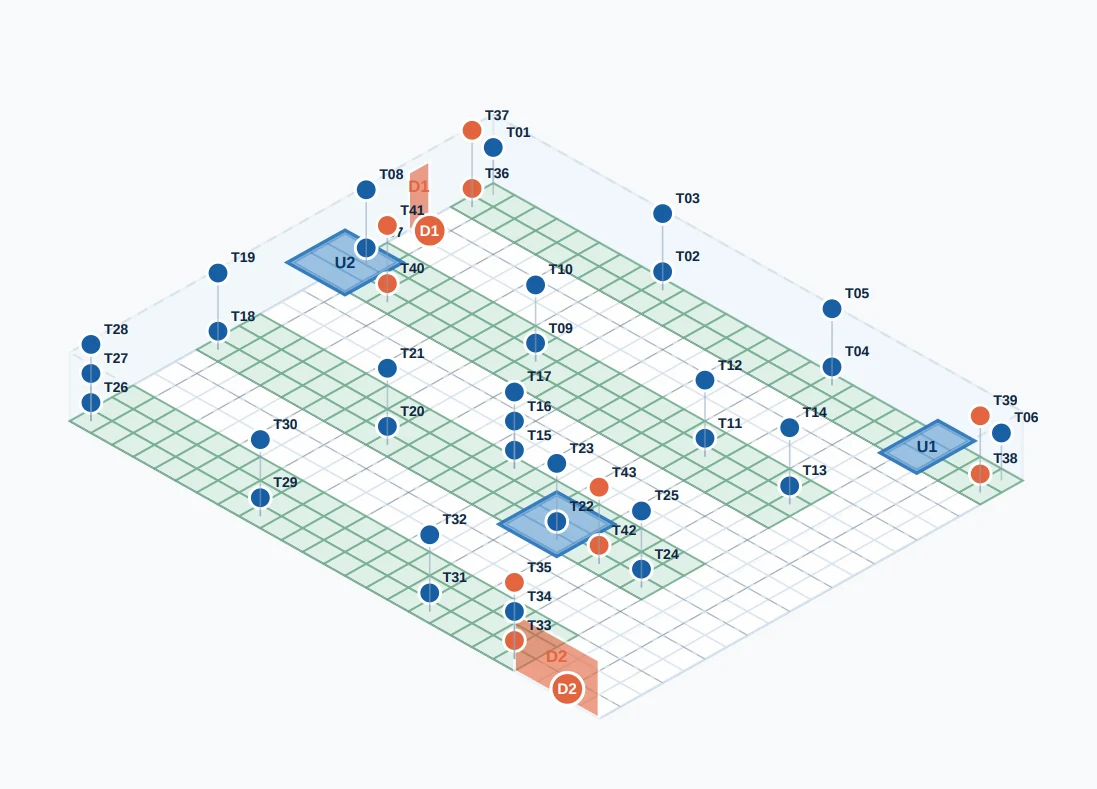
Use the tool hub or create a 3D measurement-point proposal directly. It helps make room layout, product zones, doors and risks concrete before you choose a service level.

3D mapping tool for measurement points and logger placement
Equipment and rooms

The application determines the study design

A lab fridge, incubator or -80 °C freezer should not be mapped in exactly the same way. The measurement plan should reflect intended use, loading, acceptance criteria and impact on samples or results.

Storage

Fridges, freezers and storage rooms

For reagents, standards, samples, media and temperature-sensitive materials. Mapping assesses use zones, door influence, shelves and fixed sensor position.

  • 2-8 °C, -20 °C, -80 °C or product-specific
  • Hot en cold spots and storage zones
  • Advice on monitoring and use restrictions
Process equipment

Incubators, stability and climate chambers

For equipment where uniformity, stability and suitability of sample locations are important. Relative humidity can be included where relevant.

  • Uniformity and stability
  • Loading and shelf positions
  • Suitability for intended use
Quality context

No single mapping standard, but demonstrable control

For laboratories, the required depth usually follows from intended use, the quality system and the impact on results, samples or products.

Laboratory quality

Not a mapping standard, but relevant where environmental conditions can affect the validity of laboratory results.

GMP and GxP

In GMP or GxP labs, the focus is on qualified equipment, traceable calibration and reliable documentation.

Method requirements

Some methods, samples or reagents have their own temperature limits or storage conditions.

Traceable calibration

The data loggers are supplied with calibration certificates from the calibration laboratory used.

Risk-based approach

The extent of mapping should match intended use, criticality and deviation history.

Audit evidence

The dossier supports internal QA review, customer audit, validation and accreditation questions.

What do we measure where?

From fridge to stability chamber

Measurement points are selected based on use locations, airflow, door use, loading and acceptance criteria.

LocationWhat does mapping assess?Typical output
Laboratory fridgeShelves, door zone, back wall, loading and sensor position.Assessment of suitable storage zones for 2-8 °C or product-specific limits.
-20 °C freezerDrawers, door influence, recovery, loading and temperature distribution.Substantiation of storage locations and monitoring position.
-80 °C freezerRacks, boxes, door zones, recovery after opening and temperature gradients.Insight into worst-case zones for critical samples.
IncubatorSample locations, shelves, air circulation and stability.Assessment whether used positions are suitable for the method.
Stability or climate chamberTemperature, possibly RH, shelf locations and loading pattern.Substantiation of uniformity and stability for intended use.
Approach

Three support levels

Choose the level that fits your equipment, internal validation knowledge and audit pressure.

Level 1

Self-measurement with rented loggers

You rent calibrated data loggers and perform the measurement yourself. Suitable when you already have an internal approach and mainly need reliable instruments.

Level 3

Complete on-site execution

We perform the mapping on site, analyse the data and deliver the full dossier. Suitable for audit pressure, complexity or limited internal capacity.

View all pricing and service levels

What does the dossier contain?

What does the dossier contain?

The dossier shows what was measured, why those measurement points were selected, what the results mean and whether the equipment is suitable for intended use.

See what a mapping dossier contains

ProtocolScope, duration, interval, acceptance criteria and use conditions.
Risk assessmentImpact of equipment, loading, samples, method and deviation history.
Measurement planRationale per logger position and use location.
Data analysisRaw data, graphs and summary per measurement point.
Uniformity and stabilityAssessment of distribution, variation and critical locations.
ConclusionSuitability for intended use, including recommendations and certificates.
When to use mapping?

When to use mapping?

Mapping is especially useful when temperature control must be demonstrable or when the situation has changed.

New equipment qualificationRelocation of fridge, freezer or incubatorRepair, maintenance or change with impactDoubt about temperature stabilityPreparation for audit or accreditationCritical samples, reagents or standardsChange in loading or usePeriodic risk-based requalification