Pharma & biotech

Temperature mapping for the pharmaceutical industry

Substantiate the qualification of production rooms, climate chambers and cold storage at pharmaceutical manufacturers, CMO's and biotech companies, set up according to EU GMP principles.

Production roomClimate chamberCold room 2-8 °CGMP-compliant dossierEU GMP
In short

Pharmaceutical manufacturers, CMO's and biotech companies work with GMP-relevant production rooms and storage facilities that must be qualified periodically. Temperature mapping shows whether a room or device meets the required temperature conditions at relevant product and production locations, and provides documented evidence for the qualification dossier.

Tools and 3D proposal

Start with a practical assessment

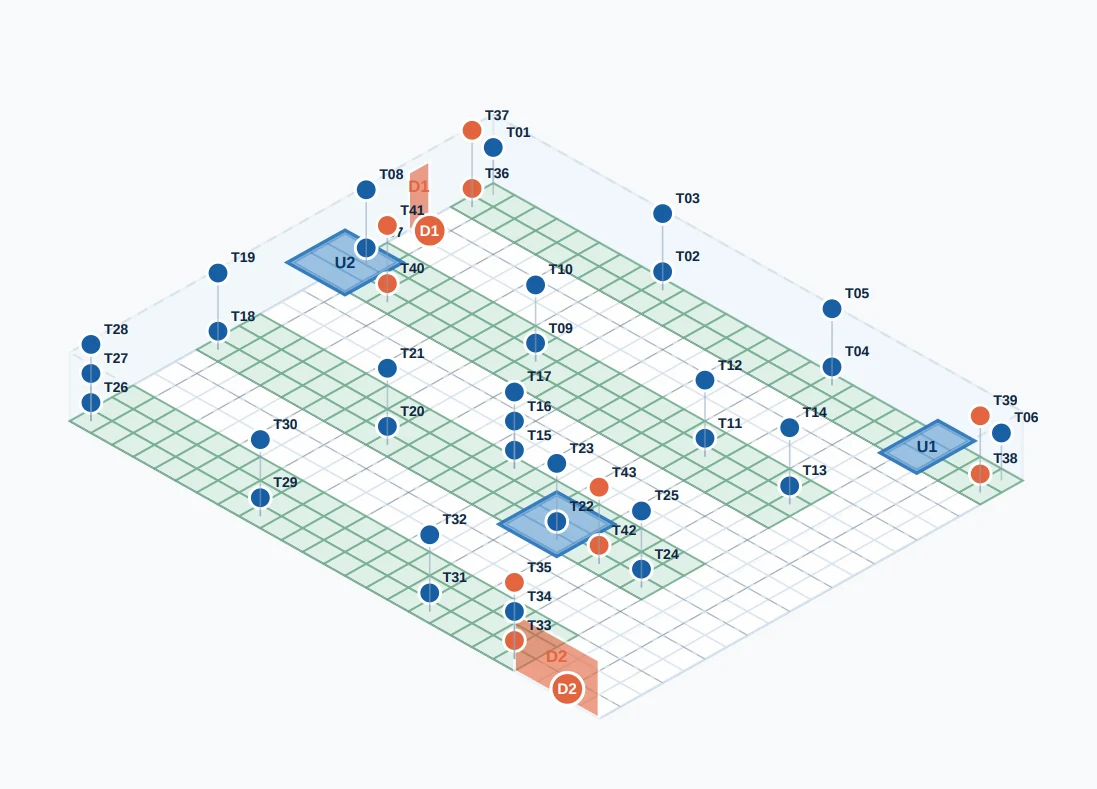
Use the tool hub or create a 3D measurement-point proposal directly. This helps make the room layout, product zones, doors and risks concrete before the study starts.

3D mapping tool for measurement points and logger placement
Two environment types

Cold storage and production environments require different approaches

In pharma and biotech practice, this usually concerns climate chambers, cold rooms and freezers on the one hand, and controlled production rooms and warehouses on the other. Both require a measurement setup that matches GMP requirements and product-specific acceptance criteria.

Cold storage and climate chambers

Climate chambers, cold rooms and freezers

For cold storage of raw materials, bulk product, finished product or biologicals. The mapping assesses temperature distribution, uniformity, loading, door influence and the substantiated position of the fixed monitoring sensor.

  • 2-8 °C, -20 °C and -80 °C, or product-specific conditions
  • Stability chambers, climate chambers and controlled cold storage
  • Sensor position based on worst-case analysis
Controlled room temperature

Production rooms and warehouses

For production rooms, weighing rooms, packaging lines and medicinal-product warehouses where temperature control must be demonstrable. The mapping assesses HVAC airflow, heat sources, product flow, external wall influence and seasonal variation.

  • 15-25 °C or room-specific GMP limits
  • HVAC performance, hot and cold spots, weekend and night conditions
  • Substantiation for qualification and change control
Standards framework and regulatory context

GMP qualification in the right regulatory context

Temperature mapping for pharma and biotech aligns with European GMP guidelines, ICH guidance and the risk assessment within your quality system. The required depth depends on use, criticality and audit pressure.

EU GMP Annex 1

For sterile manufacturing, strict requirements apply to HVAC performance, air handling and temperature control in classified areas. Mapping supports qualification of these environments.

EU GMP Annex 15

Qualification and validation require documented evidence that rooms and equipment consistently perform within established limits. Temperature mapping provides OQ substantiation.

ICH Q10 and quality system

Temperature mapping forms part of the wider pharmaceutical quality system, including change control, CAPA and periodic review of production conditions.

WHO Technical Report Series

WHO guidance for storage and distribution of medicinal products describes requirements for controlled storage conditions and qualification of storage locations.

ISPE Baseline Guide

ISPE guidance for HVAC systems and qualification of production environments provides practical frameworks for measurement setup, acceptance criteria and reporting.

Change control and requalification

After changes that may affect temperature control, such as HVAC modifications, relocation or renovation, requalification is part of the change-control process.

What do we measure where?

From cleanroom to ULT freezer

The measurement setup is tailored to the use of the room or device, the GMP class, the acceptance criteria and the question the qualification dossier must answer.

LocationWhat does mapping assess?Typical outcome
Production room / cleanroomHVAC performance, airflow, heat sources, product flow, external wall influence and night/weekend conditions.Substantiation of temperature uniformity and qualification of the production environment.
Medicinal-product warehouseWarmest and coldest zones, seasonal impact, loading docks, solar gain and height differences in racking.Assessment of suitability for controlled room temperature storage.
Climate chamber / stability chamberUniformity, shelf locations, loading, door influence and stability over the measurement period.Substantiation of suitability for stability studies or product storage.
Cold room 2-8 °CRacking, door zones, airflow, loading, compressor influence and worst-case locations.Product locations within 2-8 °C and substantiated sensor position.
Freezer -20 °C or -80 °CDrawers, racks, door influence, recovery after opening and temperature gradients.Insight into worst-case zones for raw materials, bulk product or biologicals.
Approach

Four steps to a substantiated measurement report

The route stays the same, whether you measure yourself with rented loggers or outsource the full execution.

1

Situation mapped

We map your room, limits and risks, and select the appropriate service level.

2

Tailored measurement plan

Measurement points, risk zones, measurement duration and acceptance criteria are defined in advance.

3

Measurement of your choice

You measure yourself with rented loggers, or we come on site. The report is equivalent in both cases.

4

Report delivered

Data, analysis and conclusion in one report, ready for inspection or internal quality documentation.

View pricing and service levels

Qualification dossier

What do you receive?

The dossier is set up to record the mapping in a traceable, reproducible and defendable way. Acceptance criteria are aligned with the GMP class, product-specific storage conditions and the question the dossier must answer.

Pharma practice example

For a GMP-relevant climate chamber, the mapping is aligned with product locations, loading and acceptance criteria from the URS. The dossier supports the change-control and CAPA process within your quality system.

See how a mapping dossier is structured

Protocol and risk assessmentScope, URS link, acceptance criteria, IQ/OQ/PQ reference and risk-based measurement setup.
Measurement-point planPositions aligned with use, airflow, loading and worst-case locations.
Raw data and trend graphsTemperature trend per logger, excursions and relevant observations.
Hot and cold spot analysisSubstantiation of the warmest and coldest positions and the fixed sensor location.
Conclusion and adviceSuitability assessment of the room or device and recommendations for monitoring.
Calibration certificatesTraceable calibration information for the data loggers used.
When to use it?

Mapping is mandatory or strongly recommended when changes occur or evidence is needed

In GMP-relevant environments, temperature mapping is not a one-off action. Changes, audits and periodic requalification make mapping part of the regular qualification cycle.

Commissioning a new production room, climate chamber or storage locationHVAC modification, relocation or renovation with impact on temperature controlChange control where temperature conditions have changedSeasonal mapping for rooms with limited or moderate climate controlPreparation for ANVISA, EMA or FDA inspectionAfter a deviation, temperature excursion or OOS situationPeriodic requalification based on risk and deviation history